Food
What Is Omakase? The Japanese Art of Trusting the Chef

Omakase sits at the heart of refined Japanese dining. The word itself means “I’ll leave it up to you,” a quiet invitation for the diner to place complete trust in the chef. Rather than scanning a menu and choosing dishes, guests surrender the evening’s choices so that the kitchen can respond to the day’s finest ingredients, the season, and the subtle cues of those seated at the counter.
This approach has captivated food lovers far beyond Japan. It offers more than a sequence of plates; it creates a living conversation between maker and eater. In an age of endless options and online reviews, omakase remains appealing precisely because it removes the burden of decision and replaces it with expertise and immediacy. Readers continue to seek it out because the experience feels personal, seasonal and, at its best, quietly theatrical.
Origins and Early Development
The roots of omakase lie in the sushi culture of Edo, the city that became Tokyo. During the late Edo period, particularly the Bunsei years of the early nineteenth century, nigiri sushi was sold from street stalls known as yatai. Portions were small, service was rapid, and the range of fish available changed with the catch. In that busy setting it made practical sense for some customers to leave the sequence of pieces to the chef rather than interrupt conversation with constant ordering.
As sushi moved indoors to permanent counter restaurants in later decades, the practice evolved. Regular patrons who trusted a particular itamae (sushi chef) would simply ask the kitchen to prepare something suitable. One influential figure often linked to formalising the idea is Fujimoto Shigezō, a celebrated twentieth-century chef sometimes called the “Emperor of Sushi.” Over time the phrase omakase, formed from the honorific prefix “o-” and the verb makaseru (to entrust), became the accepted way of signalling that the entire selection and pacing would rest with the chef.
The concept gained wider currency in the late twentieth century. As Japan’s economy expanded, more diners with disposable income entered high-end sushi restaurants. Many lacked detailed knowledge of seasonal fish names or traditional progression. Offering an omakase meal within an agreed budget allowed guests to enjoy premium ingredients without revealing any uncertainty, while chefs could use the freshest available produce without the risk of running short on specific items. By the 1990s the format had become a recognised and sought-after style of dining.
The Experience and Rise to Prominence
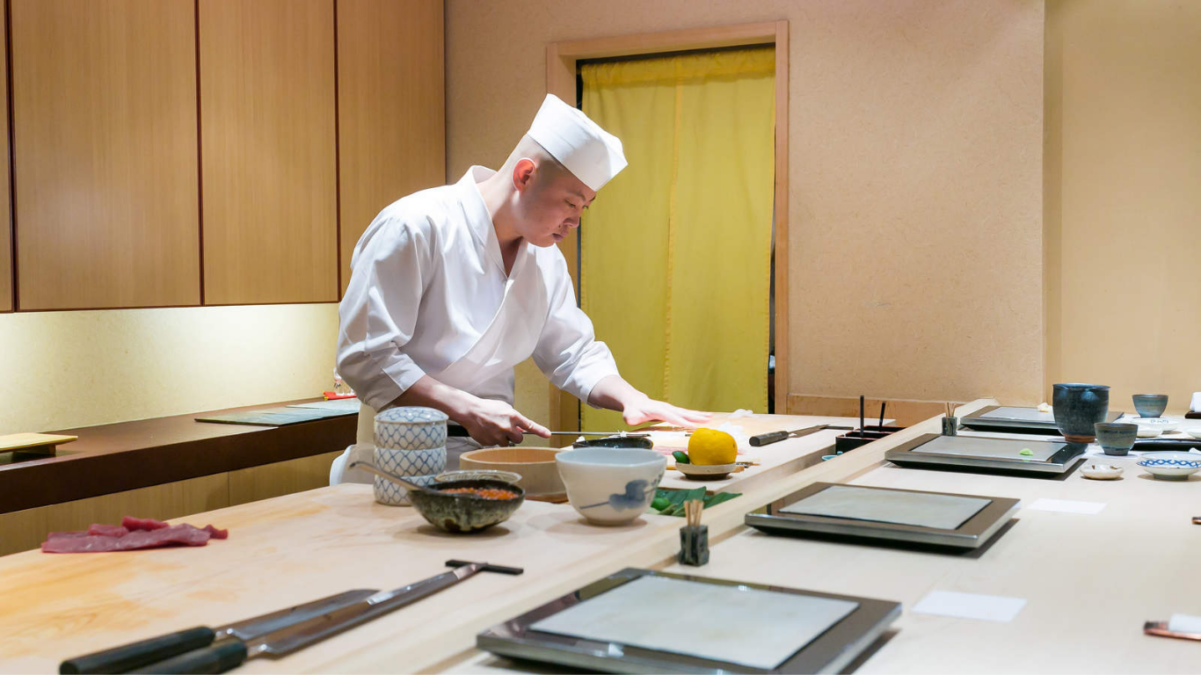
A typical omakase meal unfolds as a series of small courses, often between ten and twenty, served one after another at the counter. The chef works in full view, slicing, seasoning and presenting each piece. The progression usually moves from lighter, more delicate flavours toward richer, more intense ones so that the palate is not overwhelmed early on. Seasonal fish, shellfish, and sometimes lightly cooked or cured items appear according to what the market offers that day.
Interaction forms a key part of the occasion. The chef may announce the name and origin of each ingredient, observe the diner’s reactions, and adjust subsequent courses accordingly. Some establishments pair the food with complementary drinks, though many leave beverage choices open. The Michelin Guide has described the experience as both revered and intimidating, noting its status as a spiritual companion to the more formal multi-course tradition of kaiseki.
Prices vary widely. Accessible options can begin around the equivalent of a few hundred pounds, while the most exclusive counters in major cities may charge several times that amount. The cost reflects not only the quality of seafood but the skill required to age, cure or prepare it at its peak, the limited number of seats, and the personal attention given to each guest.
Important collaborations and public recognition have come through the global spread of Japanese cuisine. Chefs trained in Tokyo or other centres have opened counters in cities around the world, adapting the format while retaining its core principle of trust. In London the scene has grown steadily, with several highly regarded omakase restaurants offering intimate, counter-focused experiences that draw on both Japanese technique and local or carefully imported ingredients.
Challenges and Turning Points
The very qualities that make omakase distinctive also create barriers. High prices and limited seating mean many people encounter it only on special occasions. First-time diners can feel uncertain about etiquette: whether to use chopsticks or fingers for nigiri, how to pace oneself, or how to communicate allergies or preferences without undermining the chef’s control. Reliable sources stress that clear advance notice of dietary needs is both practical and expected.
Misconceptions have arisen as the term travelled. In some places outside Japan, “omakase” is used loosely for any tasting menu, even when a printed list exists and little real-time adjustment occurs. Traditional practitioners emphasise that genuine omakase remains flexible, driven by the day’s produce and the guest’s responses rather than a fixed script. Economic pressures and supply-chain issues for premium seafood have also tested chefs, prompting greater attention to sustainability and alternative sourcing while preserving quality.
Resilience appears in the continued refinement of technique. Chefs experiment with ageing fish, incorporating regional British or European produce where appropriate, and educating diners so that the experience feels welcoming rather than exclusive. The format has survived shifts in fashion precisely because it prioritises skill and seasonality over trends.

Cultural Context and Etiquette
Omakase is not a private matter of relationships or family life in the conventional sense; it is a cultural practice built on mutual respect. Guests are expected to arrive on time, avoid strong perfumes that might interfere with aroma, and remain attentive. Conversation with the chef is welcomed when it feels natural, yet silence during the preparation of a particularly delicate piece is equally acceptable. Many counters prefer that diners eat each item soon after it is placed in front of them so that temperature and texture remain ideal.
Public statements from chefs often underline the responsibility that accompanies the guest’s trust. The meal succeeds when both sides honour that exchange. No reliable public information supports widespread speculation about rigid hierarchies or secret codes; the guiding principle remains practical hospitality grounded in expertise.
Contemporary Practice and Global Reach
Today omakase appears in dedicated sushi counters, broader Japanese restaurants, and even occasional cross-cultural interpretations. In London, establishments such as those in Mayfair and beyond offer experiences that range from classic Edomae-style progression to more inventive sequences. Some chefs import specific rice or water; others highlight the best of local waters while applying Japanese methods of curing and presentation. Charity events, collaborative dinners and educational sessions have further extended the reach of the format.
Business ventures connected to omakase often focus on high-quality supply chains, training for younger chefs, and smaller, more accessible versions of the experience. Advocacy tends to centre on sustainable fishing practices and the preservation of traditional skills. The format continues to evolve without losing its essential character: the diner leaves the decisions to someone who knows the ingredients better than anyone else in the room.
Quick Bio
| Detail | Information |
| Full Name | Omakase (お任せ) |
| Meaning | “I’ll leave it up to you” / chef’s choice |
| Origin | Japanese, rooted in Edo-period sushi culture |
| Primary Association | Sushi and Japanese fine dining |
| Typical Format | Multi-course meal selected and paced by the chef |
| Key Characteristic | Trust, seasonality, counter service |
| Global Spread | Widespread since late 20th century |
| Known For | Personalised, ingredient-driven dining |
Legacy and Lasting Impact
Omakase remains important because it embodies a particular Japanese value: the willingness to entrust an experience to a skilled professional. It has influenced fine dining far beyond sushi bars, encouraging chefs in many cuisines to offer more flexible, chef-driven sequences. Public perception sees it as both an accessible luxury for those who can secure a seat and a demanding test of a chef’s consistency and creativity.
Conclusion
The lasting lesson is simple yet profound. When diners relinquish control, they open themselves to discoveries they might never have ordered. The format rewards curiosity, patience and respect for craft. In return it delivers food that is as current as the morning’s market and as considered as decades of training allow.
Omakase continues to draw people who want more than a meal. They want a conversation conducted through ingredients, timing and quiet attention. That combination of trust and excellence explains why the practice endures and why new generations of chefs and diners keep returning to the counter.