Food
The Enduring Charm of the Pork Tenderloin Sandwich: Midwest Icon on a Bun

In the heart of America’s Midwest, few dishes inspire quite the same quiet pride and enthusiastic loyalty as the pork tenderloin sandwich. This unassuming yet oversized creation—a thinly pounded, breaded and deep-fried cut of pork loin served on a soft bun—has become a regional emblem. For generations of diners in Indiana, Iowa and neighbouring states, it represents comfort, value and a tangible link to immigrant culinary traditions.
Readers remain drawn to the pork tenderloin sandwich not because of fleeting trends or celebrity endorsements, but because of its steadfast presence in everyday life. It appears at county fairs, small-town diners, state fairs and family tables. Its dramatic size, often extending well beyond the edges of the bun, creates an immediate visual impression, while the contrast of crisp coating and tender meat delivers simple satisfaction. In an age of complex fusion cuisine, the sandwich’s straightforward appeal continues to resonate.
Early Life and Background
The pork tenderloin sandwich traces its documented beginnings to the early years of the twentieth century in Huntington, Indiana. Nick Freienstein, the son of German immigrants, began selling food from a pushcart in 1904. Drawing on the Wiener schnitzel of his family’s European heritage—a thinly pounded, breaded and pan-fried veal cutlet—he adapted the dish to local realities. Veal was scarce and expensive; pork, by contrast, was abundant and familiar to Midwestern working people. Freienstein breaded and fried a slice of pork loin, placed it on a hamburger bun, and offered a portable, affordable meal.
By 1908 he had established Nick’s Kitchen, a modest restaurant that remains in business today under successive owners. Culinary historians note that the sandwich’s form also found fertile ground among Czech and Bohemian communities in eastern Iowa, where immigrants similarly reworked Central European schnitzel traditions with available pork. Large German, Austrian and Czech populations across Indiana, Iowa, Illinois and Ohio provided a ready cultural foundation. The sandwich was never the invention of a single moment of genius so much as a practical evolution: European technique meeting Midwestern ingredients and the growing American preference for handheld food.
Public records and oral histories offer no earlier verified written evidence of the sandwich in its current form predating Nick’s Kitchen. Claims of independent Iowa origins exist, yet they lack the same contemporaneous documentation. What is clear is that the dish took root quickly in communities already accustomed to pork production and fried cutlets.

Career and Rise to Fame
From its Indiana origins the pork tenderloin sandwich spread steadily through the Midwest. Roadside diners, bowling alleys, county fairs and small-town cafés adopted it as a reliable, high-value offering. By the mid-twentieth century it had become a menu staple across Indiana and Iowa, with pockets of popularity in Illinois, Missouri and Nebraska.
In Iowa the sandwich achieved near-iconic status. As the nation’s leading pork-producing state, Iowa possessed both the raw material and the cultural affinity. The Iowa Pork Producers Association launched an annual Best Breaded Pork Tenderloin contest in 2003, drawing thousands of nominations each year. The organisation later promoted a Tenderloin Trail, guiding visitors to notable examples across the state. Indiana developed its own network of dedicated spots and informal trails, with Nick’s Kitchen still regarded by many as the original source.
The sandwich earned recognition through food writing and regional guidebooks. Authors such as Jane and Michael Stern highlighted its place in American roadside dining. Social media groups devoted to “pursuing” the best examples have attracted tens of thousands of members, turning private enthusiasm into a shared pursuit. Chains such as Culver’s have carried a version of the sandwich beyond its traditional heartland, introducing it to wider audiences while local diners continue to refine their own recipes.
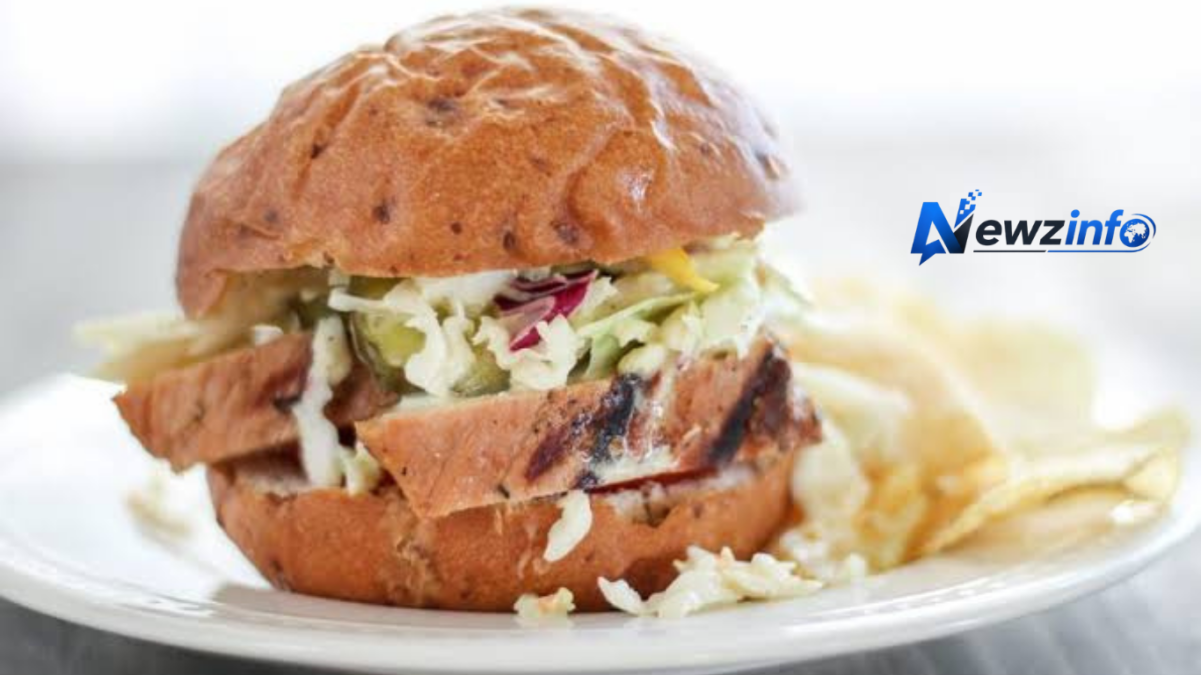
Public reputation rests on honesty and abundance. A proper pork tenderloin sandwich is expected to be generous, the cutlet often hammered thin enough to extend several inches past the bun. Toppings remain simple—mustard, ketchup, mayonnaise, pickles, onion, lettuce or tomato—chosen so they complement rather than overwhelm the meat. The dish’s reputation is that of honest, unpretentious food rather than gourmet refinement.
Personal Challenges or Turning Points
The sandwich has faced few dramatic setbacks, yet it has navigated quiet rivalries and questions of authenticity. Indiana and Iowa maintain a friendly but persistent claim to primacy. Indiana points to the documented history at Nick’s Kitchen; Iowa emphasises the dish’s perfection and ubiquity within a state that raises more pigs than any other. Culinary historians generally accept the Indiana origin while acknowledging that Iowa has made the sandwich its own through sheer enthusiasm and scale.
Debates also arise over preparation details. Some insist on saltine-cracker crumbs for the coating; others prefer standard breadcrumbs. Thickness varies: some kitchens leave the cutlet relatively substantial, while others pound it almost paper-thin to achieve the dramatic “hubcap” diameter associated with certain Iowa examples. Grilled, unbreaded versions exist but remain secondary to the classic fried form.
These discussions rarely become acrimonious. Instead they reflect the sandwich’s deep embedding in local identity. Economic pressures on independent diners and changing tastes have tested many small restaurants, yet the pork tenderloin sandwich has shown resilience, continuing to appear on menus even as other regional specialities fade.
Personal Life
As a culinary creation rather than a private individual, the pork tenderloin sandwich has no personal relationships or family life in the conventional sense. What can be stated with confidence is its place within the social fabric of the Midwest. It features at school fundraisers, church suppers, state-fair stands and casual family meals. Many Midwesterners recall childhood visits to particular diners or the annual ritual of seeking out the largest or crispiest example. Public statements from restaurant owners and pork-industry representatives consistently emphasise tradition, local ingredients and community rather than individual celebrity.
Later Career and Current Activities
In recent decades the pork tenderloin sandwich has maintained a steady presence while gaining modest wider recognition. Food writers and travellers continue to seek it out. Dedicated trails and contests keep interest alive within Indiana and Iowa. Social-media groups and online lists of recommended spots help newcomers navigate the options. Some operators have taken the sandwich on the road via food trucks, while others preserve classic recipes in long-standing brick-and-mortar locations.
Charity and industry events occasionally feature the sandwich as a fundraising centrepiece, reinforcing its association with Midwestern agricultural life. Advocacy remains low-key and practical: organisations such as the Iowa Pork Producers promote the dish as a showcase for high-quality local pork. No major commercial empire has formed around a single branded version; the sandwich thrives instead through hundreds of independent interpretations.

Quick Bio
| Detail | Information |
| Full Name | Pork Tenderloin Sandwich (also Breaded Pork Tenderloin or BPT) |
| Date of Birth | Circa 1904–1908 |
| Place of Birth | Huntington, Indiana, United States |
| Nationality | American (Midwestern regional specialty) |
| Profession | Culinary speciality / regional sandwich |
| Years Active | Early 20th century to present |
| Known For | Breaded, deep-fried pork cutlet served on a bun, often oversized |
| Estimated Net Worth | Not applicable (cultural and culinary icon) |
Legacy and Lasting Impact
The pork tenderloin sandwich endures because it embodies practical virtues: resourcefulness with available ingredients, generosity of portion, and continuity of technique across generations. It has influenced Midwestern diner menus and reinforced the cultural importance of pork in states that raise vast numbers of pigs. Public perception remains affectionate and unpretentious; the sandwich is rarely treated as high cuisine, yet it is defended with genuine loyalty.
Its quiet lesson is that lasting food traditions often arise from adaptation rather than invention. Immigrant cooks adjusted European methods to New World realities, and communities then made those adjustments their own. In an era of rapid culinary change, the sandwich’s persistence offers a reminder of the value of local identity and straightforward pleasure.
Conclusion
The journey of the pork tenderloin sandwich—from a German-American pushcart in early-twentieth-century Indiana to a beloved fixture of Midwest tables—illustrates how regional food can quietly shape collective memory. It has never required celebrity chefs or aggressive marketing campaigns. Its reputation rests on consistent delivery of crisp coating, tender meat and satisfying scale, served in ordinary places by ordinary people.