Fashion
The Enduring Appeal of the Gua Sha Stone: From Ancient Remedy to Modern Ritual

The gua sha stone has quietly moved from traditional Chinese medicine clinics into bathroom cabinets and beauty routines across the UK and beyond. Once an everyday household practice for easing muscle tension or the early signs of a cold, it is now recognised for both therapeutic scraping and gentle facial massage. Its smooth, curved edges and cool weight offer a tactile experience that feels both ancient and contemporary.
Readers remain drawn to the gua sha stone because it sits at the intersection of heritage and accessibility. In an age of high-tech skincare devices, a simple polished stone requires no batteries or apps—only steady pressure, a little oil and patience. Interest has grown as people seek natural ways to support circulation, ease everyday aches and reduce facial puffiness, even while acknowledging that research is still catching up with centuries of traditional use.
Early Origins and Cultural Background
Scraping therapies appear to stretch back thousands of years in East Asia. Archaeological evidence points to the use of smooth stones, known as bian stones, in neolithic China for external treatment of discomfort and illness. Written references to related techniques surface in classical texts such as the Huangdi Neijing, while the formal practice of gua sha became more clearly documented during the Ming dynasty (1368–1644).
The name itself is straightforward: “gua” means to scrape, and “sha” refers to the distinctive petechiae—small red or purple marks—that appear on the skin after treatment. Practitioners treated conditions linked to wind, cold or heat invading the body, as well as musculoskeletal pain and feverish illnesses.
Household objects often served the purpose: ceramic spoons, coins, water-buffalo horn or pieces of jade. The practice spread throughout East and Southeast Asia, appearing under different names—cao gio in Vietnam, kerokan in Indonesia—yet the underlying principle remained the same: deliberate, unidirectional strokes over lubricated skin to promote local circulation and ease symptoms.

Materials, Design and How the Tool Evolved
A modern gua sha stone is typically a flat, smooth-edged instrument with contoured curves designed to fit the body or face. Popular materials include:
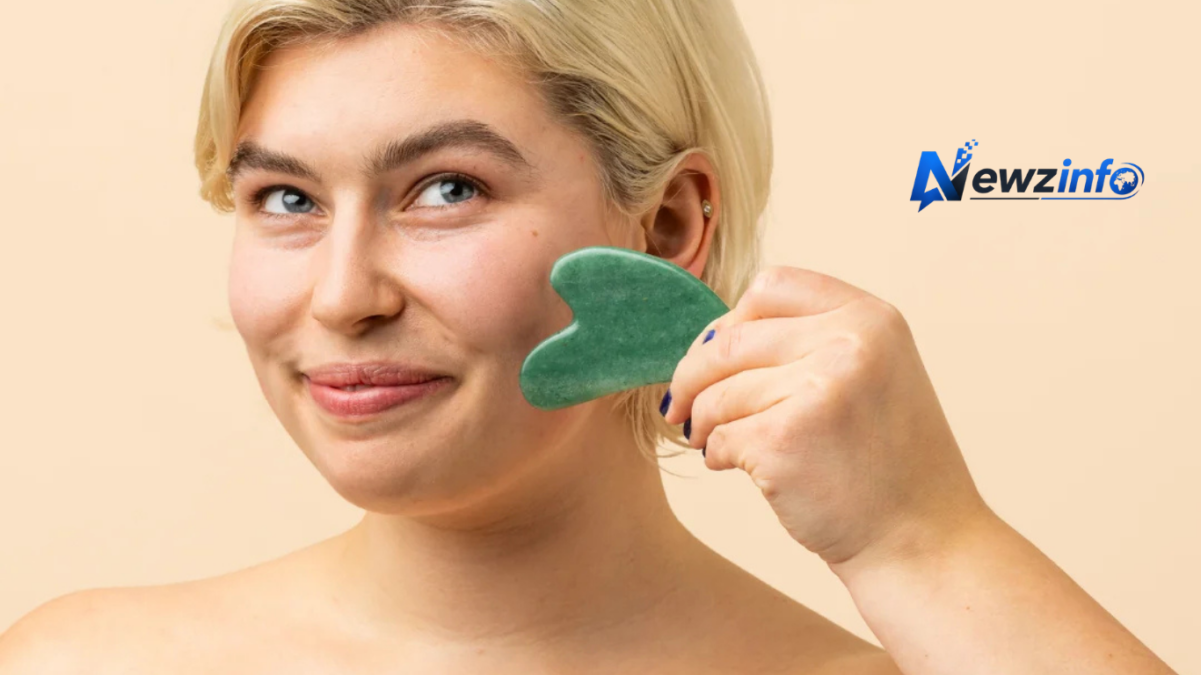
- Jade – cool to the touch, traditionally valued in Chinese culture for its association with purity and longevity.
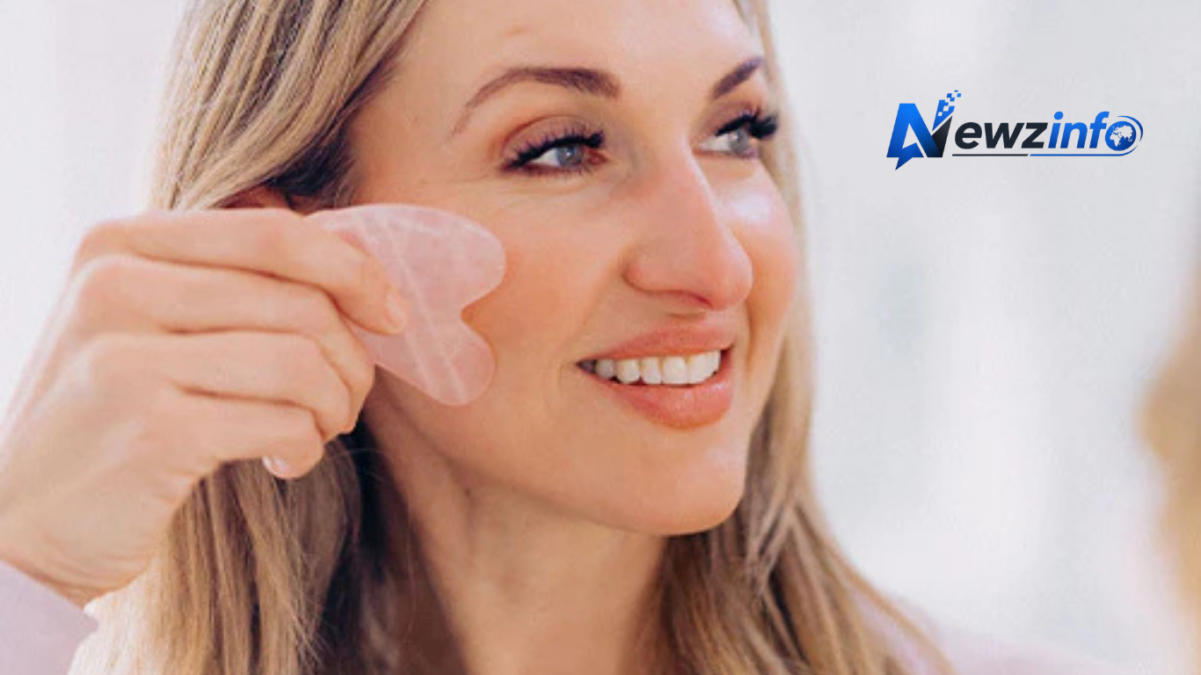
- Rose quartz – slightly softer and often chosen for facial work because of its gentle feel.
- Bian stone – a form of sedimentary rock historically linked to therapeutic heat properties.
- Water-buffalo horn – durable, naturally cooling and long used in clinical settings.
- Stainless steel or ceramic – easy to clean and favoured by some professional therapists.
Shapes vary. Body tools may be larger and more rectangular, while facial versions often feature a double-notched edge for the jawline and under-eye area plus a longer side for the forehead and cheeks. The essential requirement is a polished, non-abrasive surface that glides without breaking the skin.
Rise in Popularity and Everyday Practice
For much of the twentieth century gua sha remained primarily a clinical or family remedy within Chinese and diaspora communities. After periods of official discouragement in mid-century China, traditional modalities gradually regained recognition. In the West the technique entered wider awareness through acupuncture and Chinese-medicine practitioners, then accelerated with social-media interest in facial gua sha.
Body gua sha typically involves firmer pressure along muscle groups or meridians on the back, neck, shoulders and limbs. Oil or balm is applied first, and short, unidirectional strokes continue until light redness or petechiae appear. Facial application uses far lighter pressure and is usually performed for temporary de-puffing, improved product absorption and a sense of lift rather than to produce visible sha.
Scientific investigation has focused mainly on measurable physiological effects. Studies indicate that the technique can increase local microcirculation for a short period and may reduce certain types of musculoskeletal pain more effectively than heat packs alone in some trials. Anti-inflammatory responses and temporary improvements in range of motion have also been observed. Evidence for lasting facial contouring or permanent wrinkle reduction remains limited; any visible tightening is generally short-lived and related to fluid movement rather than structural change.
Practical Considerations and Balanced Perspective
Like any physical therapy, gua sha is not without caveats. Overly aggressive scraping can cause bruising, skin irritation or, rarely, more serious surface injury. It is generally avoided over broken skin, active infections, varicose veins, or in people with bleeding disorders or certain medications that affect clotting.
Traditional claims about balancing qi sit alongside modern explanations centred on mechanical stimulation of soft tissue, increased blood flow and possible modulation of local inflammation. Both perspectives can coexist: many users value the ritual and sensory experience even while recognising that results are often temporary and individual.
The tool’s accessibility is one of its strengths. A single well-made gua sha stone, used correctly with a suitable medium, can form part of a home self-care routine. Professional treatment remains preferable for deeper musculoskeletal issues, where technique, pressure and knowledge of anatomy matter.
Current Uses and Continuing Interest
Today the gua sha stone appears in two main contexts. In clinical Chinese-medicine settings it continues as a treatment for pain, tension and early-stage respiratory symptoms.
Public figures and skincare brands have helped normalise its presence, yet the practice itself remains simple. Many people keep a jade or rose-quartz tool beside their cleanser and moisturiser, using a few minutes of gentle strokes as a daily or weekly ritual. Interest in traditional materials has also revived appreciation for bian stone and horn among those seeking authenticity.
Quick Facts
| Detail | Information |
| Name | Gua sha stone (or gua sha tool) |
| Origin | Traditional Chinese medicine, East Asia |
| Earliest evidence | Neolithic scraping tools; formalised in Ming era |
| Common materials | Jade, rose quartz, bian stone, horn, metal |
| Primary uses | Body scraping for circulation and pain; facial massage for temporary de-puffing |
| Typical marks | Transient petechiae (“sha”) on body treatment |
| Modern popularity | Global wellness and skincare markets |
| Research status | Emerging evidence for microcirculation and pain relief; limited high-quality data on long-term cosmetic claims |
Lasting Influence
The gua sha stone endures because it bridges practical therapy and mindful ritual. It reminds users that simple, physical interventions—pressure, movement, touch—can still play a role alongside modern medicine. Its influence is visible in the wider acceptance of instrument-assisted soft-tissue techniques and in the growing curiosity about East Asian self-care practices.
Public perception has shifted from curiosity or mild alarm at the characteristic redness to recognition of a legitimate traditional method with measurable short-term effects. The lesson many draw is one of balance: respect for historical knowledge tempered by realistic expectations about what a smooth stone can and cannot achieve.
Conclusion
The gua sha stone continues to invite quiet, deliberate attention to the body. Whether used to ease a tight shoulder or to start the day with a few calming strokes across the face, it offers a tangible link to a long tradition of hands-on care.