Fashion
Frank Gehry Las Vegas: The Architect Who Brought a Sculptural Icon to the Desert

Frank Gehry, the visionary Canadian-American architect renowned for his daring, deconstructivist forms, left an indelible mark on cities around the world. His connection to Las Vegas, though not as extensive as his work in Los Angeles or Bilbao, produced one of the city’s most distinctive landmarks: the Cleveland Clinic Lou Ruvo Center for Brain Health. This undulating stainless-steel structure stands as a bold statement in Symphony Park, symbolising hope amid the desert landscape.
Gehry’s architecture often challenges conventions, using curvaceous metal skins and fragmented geometries that evoke movement and emotion. In Las Vegas, a city known for spectacle, his design for the Ruvo Center offered something deeper—a thoughtful response to a personal tragedy and a call for medical innovation. Decades later, the building continues to draw attention, reminding visitors that even in a place of entertainment, architecture can serve profound human needs.
Early Life and Background
Frank Owen Gehry was born Frank Owen Goldberg on 28 February 1929 in Toronto, Canada, to a working-class Jewish family. His father, Irving, and mother, Thelma (née Kaplanski), fostered his creativity from an early age. Young Frank spent hours in his grandfather’s hardware store, building imaginary cities from scraps of wood, metal, and other materials—experiences that would later define his innovative use of everyday and industrial substances.
The family faced financial challenges and moved to Los Angeles in 1947 when Gehry was a teenager. He worked various jobs, including driving a delivery truck, while pursuing his education. He enrolled at the University of Southern California’s School of Architecture, graduating in 1954. To counter antisemitism, he changed his surname from Goldberg to Gehry at the suggestion of his first wife, Anita Snyder.
Gehry briefly studied city planning at Harvard Graduate School of Design but left before completing the programme. After military service and time working in Paris, he returned to California and established his own practice in 1962. His early interests in art, sculpture, and unconventional materials set the stage for a career that would redefine architectural boundaries.
Career and Rise to Fame
Gehry’s early work included residential projects and furniture, notably his “Easy Edges” cardboard chairs in the late 1960s. His breakthrough came with the renovation of his own Santa Monica home in the late 1970s, where he wrapped a traditional bungalow in chain-link fencing, plywood, and corrugated metal, creating a deconstructivist icon that brought him international notice.
Major milestones followed, including the Vitra Design Museum in Germany and the Guggenheim Museum Bilbao in Spain (1997). The latter’s shimmering titanium forms sparked the “Bilbao effect,” transforming the city’s economy and cementing Gehry’s reputation. In Los Angeles, the Walt Disney Concert Hall (2003) became another triumph, despite construction delays and budget issues.
Gehry received the Pritzker Prize in 1989, the field’s highest honour, along with the Presidential Medal of Freedom (2016), the Royal Institute of British Architects Gold Medal, and many others. His collaborations with artists and institutions, and his use of computer-aided design (CATIA software), pushed architecture into new territories of complex, sculptural expression.

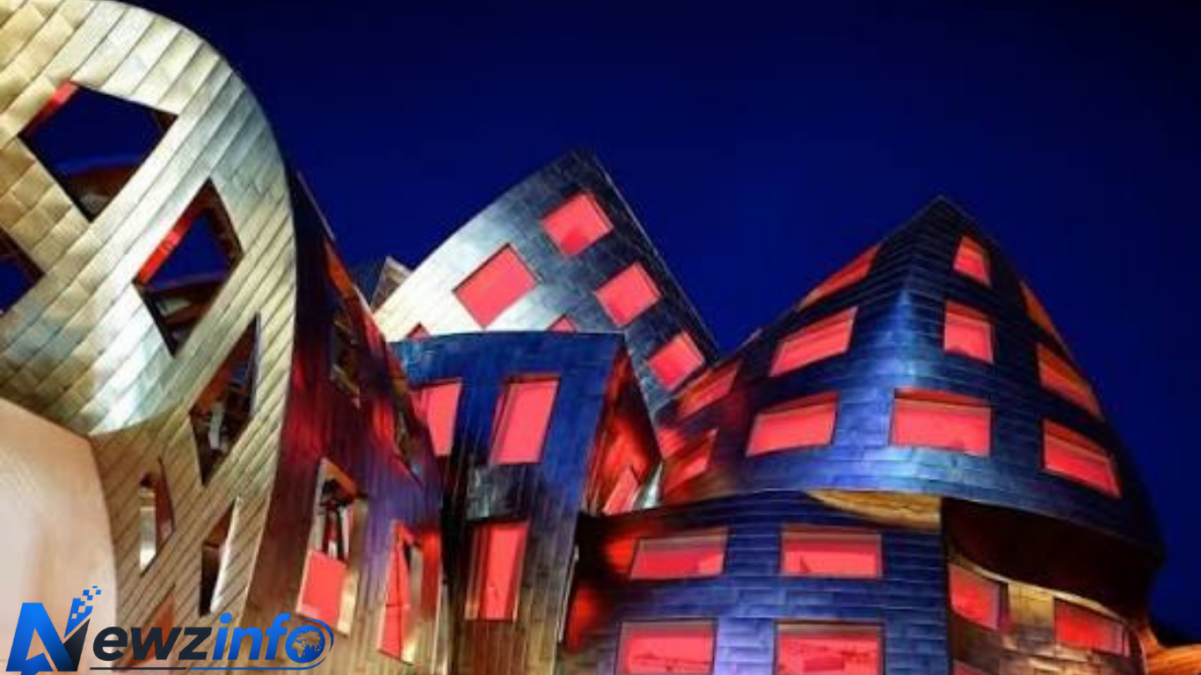
Frank Gehry Las Vegas: The Lou Ruvo Center for Brain Health
In the early 2000s, Las Vegas liquor distributor Larry Ruvo approached Gehry to design a neurological research and treatment facility. Ruvo’s father, Lou, had suffered from Alzheimer’s, motivating the creation of Keep Memory Alive. Initially hesitant about building in Las Vegas, Gehry was moved by the project’s mission and agreed, on the condition that it also address Huntington’s disease.
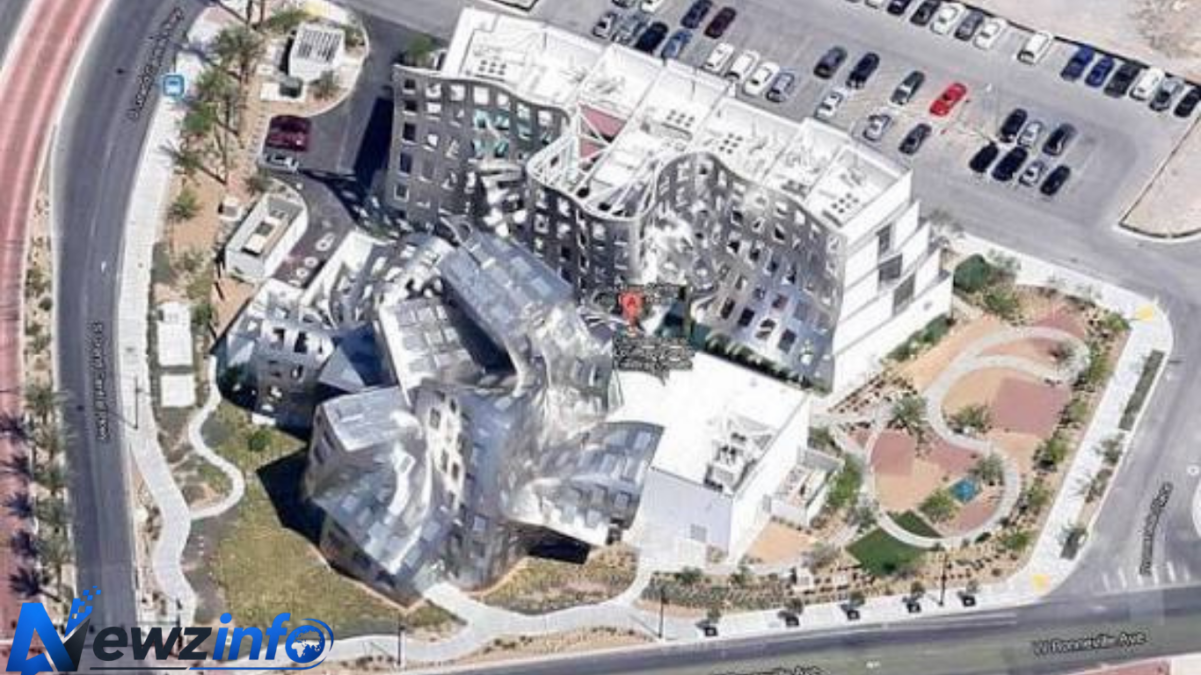
Groundbreaking occurred in 2007, and the Cleveland Clinic Lou Ruvo Center for Brain Health opened in 2010. The 60,000-square-foot complex features a striking, fragmented design with thousands of stainless-steel panels forming undulating, brain-like folds. A dramatic steel canopy shades the courtyard, while the clinical areas offer natural light and calming interiors. Costing around $100 million, it includes research facilities, treatment spaces, and event areas.
Gehry described it as “the mouse that roared”—a smaller but impactful presence amid larger developments. The building has become a recognisable landmark visible from Interstate 15, symbolising Las Vegas’s ambitions beyond entertainment. It continues to support groundbreaking work on neurodegenerative diseases.
Personal Challenges or Turning Points
Gehry faced professional scepticism early on, with critics questioning the practicality of his bold forms. Budget overruns and construction complexities plagued projects like the Disney Concert Hall. Personally, he navigated family changes, including his first marriage’s end.
His resilience shone through persistence and technological innovation. By embracing digital tools in the 1990s, he turned potential limitations into strengths, allowing complex curves to become buildable realities. Later in life, he reflected on balancing artistic vision with functionality, as seen in the Ruvo Center’s patient-focused interiors.
Personal Life
Gehry married Anita Snyder in 1952; they had two daughters before divorcing in 1966. In 1975, he married Berta Isabel Aguilera, with whom he had two sons. The family lived in Santa Monica, where Gehry designed notable homes. He maintained a passion for ice hockey and enjoyed a relatively private life despite his fame.
He avoided gossip and focused on work and family. Public statements emphasised creativity, collaboration, and the importance of architecture serving people.
Later Career and Current Activities (Legacy Perspective)
In his later decades, Gehry continued ambitious projects, including the Fondation Louis Vuitton in Paris, expansions in Los Angeles, and international works. He remained active in design until his passing on 5 December 2025 at age 96 in Santa Monica, after a brief respiratory illness.
His firm, Gehry Partners, continues under its team, completing projects like the Guggenheim Abu Dhabi. Gehry’s influence persists through teaching, exhibitions, and the enduring appeal of his buildings as cultural and economic catalysts.
Quick Bio
| Detail | Information |
| Full Name | Frank Owen Gehry (née Goldberg) |
| Date of Birth | 28 February 1929 |
| Place of Birth | Toronto, Canada |
| Nationality | Canadian-American |
| Profession | Architect |
| Years Active | 1962–2025 |
| Known For | Guggenheim Museum Bilbao, Walt Disney Concert Hall, Lou Ruvo Center for Brain Health |
| Estimated Net Worth | Approximately $100 million |
Legacy and Lasting Impact
Frank Gehry transformed architecture by prioritising emotion, context, and innovation over rigid modernism. His buildings, including the one in Las Vegas, demonstrate how bold design can elevate a city’s identity and support vital causes. The “Bilbao effect” he popularised influenced urban regeneration worldwide.
Public perception views him as a genius who made architecture accessible and exciting. His work encourages future generations to experiment while remaining grounded in human experience. In Las Vegas, the Ruvo Center stands as a testament to his ability to blend spectacle with substance.
Conclusion
Frank Gehry’s journey from Toronto hardware stores to global icon status reflects a lifelong commitment to creativity and resilience. His contribution to Las Vegas through the Lou Ruvo Center for Brain Health exemplifies how one building can honour personal stories while advancing public good. Though he is no longer with us, his sculptural legacy endures, inspiring awe and reflection in the desert and beyond.