
Food
Costco Food Court Menu Nutrition: A Detailed Guide to What You’re Really Eating


The Costco food court has earned a cult following for its generous portions, wallet-friendly prices, and reliable comfort food. Whether you’re powering through a big shop or treating the family after a successful bulk buy, the menu delivers straightforward satisfaction. But as more shoppers pay closer attention to what goes into their bodies, questions about Costco food court menu nutrition have grown louder. How many calories are actually in that famous hot dog? Is the chicken bake a protein-packed hero or a hidden indulgence? This article breaks it down with balanced, factual insights tailored especially for UK members.
Costco’s food court philosophy has always prioritised value and convenience. In the UK, the menu blends familiar favourites with some British twists, creating a unique experience compared to its US counterpart. Understanding the nutrition behind these items helps you make informed choices without sacrificing the fun of a post-shopping meal.
The Appeal of Costco’s Food Court in the UK
Stepping into a Costco warehouse in the UK often ends with a detour to the food court. The aroma of pizza and hot dogs draws in tired shoppers, promising quick, hot food at prices that feel almost too good to be true. The £1.50 hot dog and drink combo remains a legendary bargain, while pizza slices and the chicken bake offer hearty portions that can easily feed one hungry adult or stretch for two.
What sets the UK food court apart is its mix of international staples and local adaptations. You’ll find jacket potatoes (a British classic), gelato options, and sometimes unique sandwiches not available stateside. Yet the core nutritional profile shares similarities with the global chain: generous calories, solid protein in many items, and notably high sodium levels across the board.
This combination makes the food court both a blessing and a point of curiosity for health-conscious members. Let’s explore the Costco food court menu nutrition in depth.
Popular Items and Their Nutritional Breakdown
The Iconic Hot Dog
The all-beef hot dog with bun is a cornerstone of the Costco food court experience. In the UK, it typically lands around 580 calories, with approximately 34.5g of fat, 42g of carbohydrates, and 23g of protein. Sodium sits high at roughly 1,620mg.
Opting for the combo with a drink pushes the total closer to 850 calories. It’s a filling, protein-moderate choice that delivers classic flavour, though the sodium content means it’s best enjoyed occasionally rather than daily.
Pizza Slices: Cheese vs Pepperoni
Pizza is one of the most popular picks. UK versions tend to be slightly more calorie-dense than US counterparts. A cheese slice often comes in at around 710–751 calories, while pepperoni hovers near 650–826 calories depending on the location and exact preparation.
A whole pepperoni pizza can exceed 4,900 calories, highlighting just how substantial these pies are. Each slice offers a good hit of protein (around 33–41g) alongside carbs and fats from cheese and toppings. The high calorie count stems from generous cheese and dough portions—perfect after a long shop but something to balance with lighter meals elsewhere in the day.
The Mighty Chicken Bake
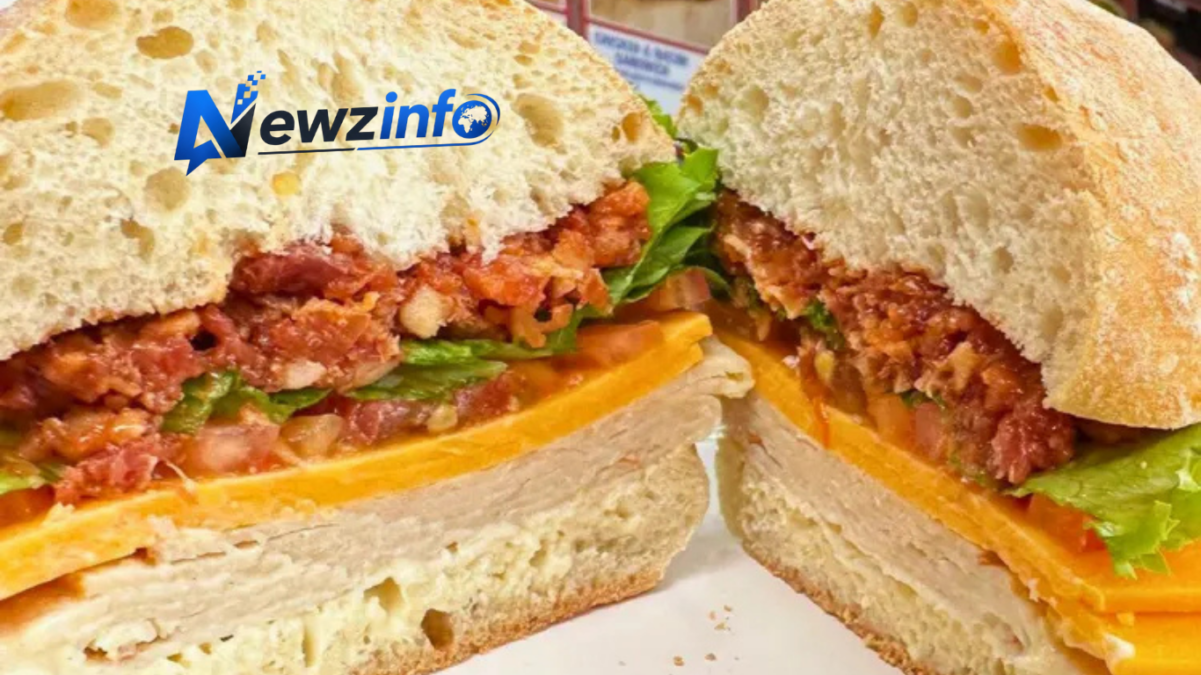
The chicken bake remains a standout for many. One serving (approximately 353g) provides about 840 calories, 32g fat, 83g carbs, and an impressive 52g of protein. Sodium reaches 2,650mg.
This item shines as a high-protein option, making it appealing for those seeking satiety. However, the calorie density and sodium mean it functions best as a substantial meal rather than a snack.
Other Notable Options
- Jacket Potatoes: A lighter UK favourite. A plain one can be as low as 300–400 calories before toppings like cheese, beans, or tuna, offering a more balanced, fibre-rich choice.
- Salads (where available, such as chicken Caesar): Around 650 calories with dressing, providing decent protein but high sodium. Skipping or reducing dressing lowers the count significantly.
- Desserts and Drinks: Ice cream, gelato, smoothies, and sundaes add 300–500+ calories quickly. A mango smoothie, for example, can be relatively lower in fat but higher in sugars.
H2: Understanding Costco Food Court Menu Nutrition Overall
Most items range from 580 to 920 calories per serving, placing them firmly in the “indulgent meal” category for the average adult. Protein levels are often respectable (20–52g), which helps with fullness, but sodium frequently exceeds 1,500–2,500mg per item—approaching or surpassing daily recommendations.
UK menus may vary slightly by warehouse and over time, with some locations displaying calorie information on signs or menus. Always check in-store for the most current details, as recipes and portion sizes can evolve.
Making Smarter Choices at the Food Court
Balancing enjoyment with nutrition is entirely possible. Here are practical strategies:
- Portion Awareness: Share a pizza slice or chicken bake if possible. The large servings are designed for value but can easily exceed half your daily calorie needs.
- Customise Where You Can: Request no bun on the hot dog, light dressing on salads, or skip sugary drinks in favour of water.
- Pair with Balance: Enjoy your food court treat after loading up on fresh produce and lean proteins from the main shopping floor.
- Occasional Treat Mindset: The food court excels as a reward or convenience option rather than everyday fare. Its strength lies in affordability and satisfaction, not daily nutritional optimisation.
For those tracking macros, items like the chicken bake offer solid protein-to-calorie ratios, while jacket potatoes or simpler hot dogs (no bun) lean lighter on carbs.
Health Considerations and Common Questions
High sodium is the most consistent flag across the Costco food court menu. Regular consumption could impact blood pressure for sensitive individuals, so pairing with potassium-rich foods (like bananas or spinach from your shop) and staying hydrated helps.
Calories are another focus. A single meal can provide 700–1,000+ calories, which suits active shoppers or those with higher needs but requires mindfulness for others. The menu isn’t inherently “unhealthy”—context matters. An occasional visit fits most balanced lifestyles.
Allergies and dietary preferences are well-served in some respects (e.g., cheese pizza for vegetarians), but cross-contamination is possible in a busy food court environment. Check with staff for specific needs.
Limited public data exists for every UK-specific variation, so in-store signage or direct enquiries remain the best source for precise, location-specific Costco food court menu nutrition details.

Quick Nutritional Overview Table
| Detail | Information |
| Typical Hot Dog + Bun | ~580 kcal, 23g protein, high sodium |
| Cheese Pizza Slice | ~710–751 kcal, 41g protein |
| Chicken Bake | ~840 kcal, 52g protein, 2,650mg sodium |
| Common Calorie Range | 580–920 kcal per main item |
| Key Nutrient Focus | Good protein; watch sodium & overall calories |
Note: Values are approximate and can vary. Always verify in-store.
The Broader Context: Value, Convenience, and Moderation
Costco’s food court succeeds because it delivers exactly what busy families and value-seekers want: hot, filling food without breaking the bank. The nutrition profile reflects that mission—energy-dense and satisfying rather than light or specialised.
In the UK, the menu’s British touches like jacket potatoes add welcome variety, allowing members to enjoy familiar comforts alongside global hits. This blend keeps the experience fresh and relevant.
Ultimately, the Costco food court menu nutrition story is one of informed enjoyment. By understanding the numbers, shoppers can savour their favourites responsibly while appreciating the remarkable value that makes Costco unique.
Legacy of the Costco Food Court Experience
The food court has become intertwined with the Costco brand itself. It embodies the warehouse club’s promise: exceptional value in every aspect of the membership. Its lasting impact lies in how it turns routine shopping into a more enjoyable outing, fostering loyalty through simple pleasures backed by consistent quality.
Conclusion
Lessons from examining the menu? Balance remains key. Treats taste best when they complement, rather than dominate, an overall healthy approach to eating. The food court proves you don’t need complexity for satisfaction—just good ingredients, fair pricing, and a bit of awareness.
In a world of ever-changing food trends, Costco’s straightforward offerings continue to resonate. They remind us that nutrition isn’t about perfection but about making conscious choices that fit real life.
Searching for fast food near me is one of the most common impulses of modern life. Whether you are rushing between meetings, feeding the family after a long day, or simply craving something familiar and filling, that quick search delivers options almost instantly. In Britain the phrase captures more than convenience. It reflects a national relationship with affordable, speedy meals that has evolved over decades.
From high-street bakeries to global burger giants, the landscape of fast food near me is rich, competitive and deeply woven into everyday British culture. Readers keep returning to the topic because the options keep changing, new health-conscious choices appear, and local favourites continue to hold their own against international brands. This feature explores how the sector grew, what dominates searches today, and how to navigate the choices wisely.
Early Life and Background
Fast food as we know it did not arrive fully formed. Its roots in Britain stretch back further than many realise. Post-war dining habits shifted as people sought affordable meals outside the home. In the 1950s the Berni Inn chain introduced many Britons to casual restaurant dining, while Wimpy opened its first London branch in 1954 and offered burgers served with cutlery and china plates.
The true acceleration came with American imports. KFC opened its first UK restaurant in Preston, Lancashire, in 1965. McDonald’s followed in 1974 with its debut site in Woolwich, south-east London. Burger King arrived two years later. These openings marked a turning point. Suddenly the idea of grabbing a standardised, quickly prepared meal became mainstream.
Homegrown players developed in parallel. Greggs began in Newcastle in 1939 as a bakery delivering ingredients by bicycle. It expanded into high-street shops selling sausage rolls, sandwiches and later a wide range of on-the-go food. By the late twentieth century the combination of international chains and British institutions had created a dense network of options available almost everywhere.
Education in the modern sense was unnecessary; the market itself taught consumers what to expect. Early interests centred on speed, consistency and value. Those principles still drive people typing “fast food near me” into their phones today.
Career and Rise to Fame
The breakthrough came in the 1970s and 1980s as the big brands scaled rapidly. McDonald’s, KFC and Burger King spread across the country, bringing drive-thrus, standardised menus and heavy advertising. Subway and others added variety. At the same time Greggs grew into the chain with the largest number of physical locations in the UK, surpassing many global names by sheer density on the high street.
Major milestones included the expansion of delivery services, the rise of app-based ordering, and the adaptation of menus to local tastes. Greggs’ vegan sausage roll became a cultural talking point. Nando’s peri-peri chicken embedded itself in British social life. Pret A Manger carved a niche with fresher, sandwich-led offerings.
Recognition arrived through sheer ubiquity and public affection. Polls have repeatedly shown Greggs ranking among the most positively viewed dining brands in the UK, often ahead of McDonald’s. Collaborations with fashion retailers, limited-edition menu items and celebrity endorsements further raised profiles. The public reputation of the sector is mixed—praised for accessibility and convenience, scrutinised for nutritional content—but the demand remains constant.
Personal Challenges or Turning Points
The industry has faced well-documented pressures. Rising concerns about health and obesity prompted menu reformulations, clearer calorie labelling and the introduction of lighter or plant-based options. Economic pressures, including higher ingredient and energy costs, tested operators. The pandemic accelerated delivery and contactless service while forcing temporary closures.
Some chains experienced setbacks. Certain American brands struggled to maintain UK footholds or had to relaunch. Independent and regional chicken shops faced competition from both global players and new entrants such as Popeyes. Resilience appeared in adaptation: Greggs continued opening hundreds of new sites, McDonald’s refined its breakfast and value offerings, and many operators invested in app loyalty schemes and healthier ranges.
These challenges produced growth rather than collapse. Consumers still search for fast food near me because the core proposition—speed, familiarity and reasonable price—survived every test.
Personal Life
Public information about the sector focuses on collective rather than individual stories. Confirmed patterns show that fast food forms part of family routines, student life, late-night journeys and workday lunches. Chains publish statements on sourcing, sustainability and community programmes. Greggs runs a foundation supporting education and food poverty initiatives. Larger operators report on packaging reduction and animal welfare standards.
Relationships between brands and customers are transactional yet enduring. People form habits around particular locations or menu items. Marriage of convenience and tradition is evident every time a family heads to the same familiar counter. No reliable public data supports speculative claims about private lives of executives or specific outlets; the focus remains on the service delivered to the public.
Later Career and Current Activities
Today the market continues to evolve. Greggs leads by store count with well over 2,500 locations and ambitions to grow further. McDonald’s maintains strong brand recognition and a large estate. KFC holds significant share in the chicken category while newer American chicken brands expand. Domino’s and other delivery-focused operators thrive alongside traditional walk-in sites.
Public appearances take the form of high-profile store openings, menu launches and charity partnerships. Business ventures include drive-thru expansion, ghost kitchens and collaborations with retailers. Advocacy centres on responsible marketing, waste reduction and employment opportunities for young people. Digital tools now dominate discovery: maps, reviews and real-time opening hours shape every “fast food near me” search.
Quick Bio
| Detail | Information |
| Full Name | Fast food sector in the UK |
| Date of Birth | Roots in 1930s–1950s; major growth from 1960s |
| Place of Birth | United Kingdom (with international influences) |
| Nationality | British-led with global chains |
| Profession | Quick-service restaurants and takeaways |
| Years Active | 1950s–present |
| Known For | Convenience, value, high-street presence |
| Estimated Net Worth | Collective multi-billion-pound market |
Legacy and Lasting Impact
The lasting importance of fast food near me lies in its role as a reliable, democratic option. It has shaped high streets, employment patterns and eating habits for generations. Influence extends to menu innovation, technology adoption and the balancing act between speed and quality. Public perception remains pragmatic: many people use these outlets regularly while remaining aware of nutritional trade-offs.
Lessons include the value of consistency, the power of local adaptation, and the need to respond to changing consumer expectations around health and sustainability. The sector’s ability to remain relevant through economic and social shifts explains why the search query endures.
Conclusion
From post-war beginnings to today’s dense network of options, the story of fast food near me is one of practical evolution. What began with a handful of pioneering sites has become an everyday resource for millions. The best experiences still combine speed with decent quality, and the strongest brands continue to listen to their customers.
Must Read: Yankees vs Mets: Intense Subway Series Rivalry Heats Up with September Showdown Looming

Omakase sits at the heart of refined Japanese dining. The word itself means “I’ll leave it up to you,” a quiet invitation for the diner to place complete trust in the chef. Rather than scanning a menu and choosing dishes, guests surrender the evening’s choices so that the kitchen can respond to the day’s finest ingredients, the season, and the subtle cues of those seated at the counter.
This approach has captivated food lovers far beyond Japan. It offers more than a sequence of plates; it creates a living conversation between maker and eater. In an age of endless options and online reviews, omakase remains appealing precisely because it removes the burden of decision and replaces it with expertise and immediacy. Readers continue to seek it out because the experience feels personal, seasonal and, at its best, quietly theatrical.
Origins and Early Development
The roots of omakase lie in the sushi culture of Edo, the city that became Tokyo. During the late Edo period, particularly the Bunsei years of the early nineteenth century, nigiri sushi was sold from street stalls known as yatai. Portions were small, service was rapid, and the range of fish available changed with the catch. In that busy setting it made practical sense for some customers to leave the sequence of pieces to the chef rather than interrupt conversation with constant ordering.
As sushi moved indoors to permanent counter restaurants in later decades, the practice evolved. Regular patrons who trusted a particular itamae (sushi chef) would simply ask the kitchen to prepare something suitable. One influential figure often linked to formalising the idea is Fujimoto Shigezō, a celebrated twentieth-century chef sometimes called the “Emperor of Sushi.” Over time the phrase omakase, formed from the honorific prefix “o-” and the verb makaseru (to entrust), became the accepted way of signalling that the entire selection and pacing would rest with the chef.
The concept gained wider currency in the late twentieth century. As Japan’s economy expanded, more diners with disposable income entered high-end sushi restaurants. Many lacked detailed knowledge of seasonal fish names or traditional progression. Offering an omakase meal within an agreed budget allowed guests to enjoy premium ingredients without revealing any uncertainty, while chefs could use the freshest available produce without the risk of running short on specific items. By the 1990s the format had become a recognised and sought-after style of dining.
The Experience and Rise to Prominence
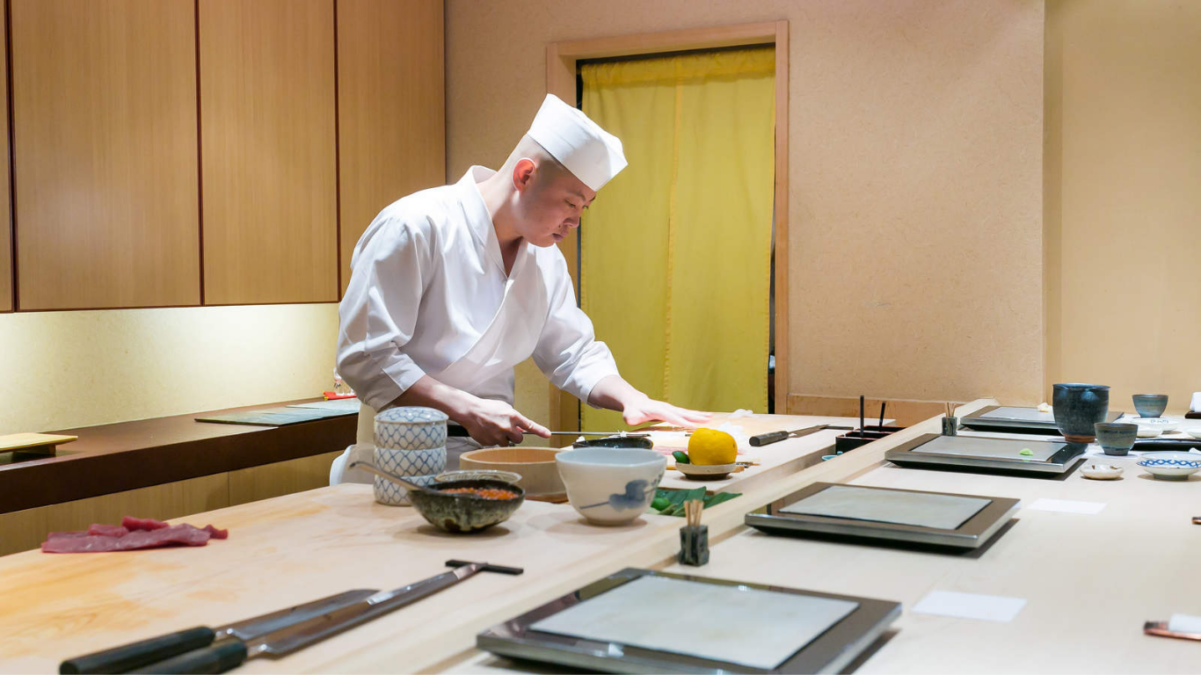
A typical omakase meal unfolds as a series of small courses, often between ten and twenty, served one after another at the counter. The chef works in full view, slicing, seasoning and presenting each piece. The progression usually moves from lighter, more delicate flavours toward richer, more intense ones so that the palate is not overwhelmed early on. Seasonal fish, shellfish, and sometimes lightly cooked or cured items appear according to what the market offers that day.
Interaction forms a key part of the occasion. The chef may announce the name and origin of each ingredient, observe the diner’s reactions, and adjust subsequent courses accordingly. Some establishments pair the food with complementary drinks, though many leave beverage choices open. The Michelin Guide has described the experience as both revered and intimidating, noting its status as a spiritual companion to the more formal multi-course tradition of kaiseki.
Prices vary widely. Accessible options can begin around the equivalent of a few hundred pounds, while the most exclusive counters in major cities may charge several times that amount. The cost reflects not only the quality of seafood but the skill required to age, cure or prepare it at its peak, the limited number of seats, and the personal attention given to each guest.
Important collaborations and public recognition have come through the global spread of Japanese cuisine. Chefs trained in Tokyo or other centres have opened counters in cities around the world, adapting the format while retaining its core principle of trust. In London the scene has grown steadily, with several highly regarded omakase restaurants offering intimate, counter-focused experiences that draw on both Japanese technique and local or carefully imported ingredients.
Challenges and Turning Points
The very qualities that make omakase distinctive also create barriers. High prices and limited seating mean many people encounter it only on special occasions. First-time diners can feel uncertain about etiquette: whether to use chopsticks or fingers for nigiri, how to pace oneself, or how to communicate allergies or preferences without undermining the chef’s control. Reliable sources stress that clear advance notice of dietary needs is both practical and expected.
Misconceptions have arisen as the term travelled. In some places outside Japan, “omakase” is used loosely for any tasting menu, even when a printed list exists and little real-time adjustment occurs. Traditional practitioners emphasise that genuine omakase remains flexible, driven by the day’s produce and the guest’s responses rather than a fixed script. Economic pressures and supply-chain issues for premium seafood have also tested chefs, prompting greater attention to sustainability and alternative sourcing while preserving quality.
Resilience appears in the continued refinement of technique. Chefs experiment with ageing fish, incorporating regional British or European produce where appropriate, and educating diners so that the experience feels welcoming rather than exclusive. The format has survived shifts in fashion precisely because it prioritises skill and seasonality over trends.
Cultural Context and Etiquette
Omakase is not a private matter of relationships or family life in the conventional sense; it is a cultural practice built on mutual respect. Guests are expected to arrive on time, avoid strong perfumes that might interfere with aroma, and remain attentive. Conversation with the chef is welcomed when it feels natural, yet silence during the preparation of a particularly delicate piece is equally acceptable. Many counters prefer that diners eat each item soon after it is placed in front of them so that temperature and texture remain ideal.
Public statements from chefs often underline the responsibility that accompanies the guest’s trust. The meal succeeds when both sides honour that exchange. No reliable public information supports widespread speculation about rigid hierarchies or secret codes; the guiding principle remains practical hospitality grounded in expertise.
Contemporary Practice and Global Reach
Today omakase appears in dedicated sushi counters, broader Japanese restaurants, and even occasional cross-cultural interpretations. In London, establishments such as those in Mayfair and beyond offer experiences that range from classic Edomae-style progression to more inventive sequences. Some chefs import specific rice or water; others highlight the best of local waters while applying Japanese methods of curing and presentation. Charity events, collaborative dinners and educational sessions have further extended the reach of the format.
Business ventures connected to omakase often focus on high-quality supply chains, training for younger chefs, and smaller, more accessible versions of the experience. Advocacy tends to centre on sustainable fishing practices and the preservation of traditional skills. The format continues to evolve without losing its essential character: the diner leaves the decisions to someone who knows the ingredients better than anyone else in the room.
Quick Bio
| Detail | Information |
| Full Name | Omakase (お任せ) |
| Meaning | “I’ll leave it up to you” / chef’s choice |
| Origin | Japanese, rooted in Edo-period sushi culture |
| Primary Association | Sushi and Japanese fine dining |
| Typical Format | Multi-course meal selected and paced by the chef |
| Key Characteristic | Trust, seasonality, counter service |
| Global Spread | Widespread since late 20th century |
| Known For | Personalised, ingredient-driven dining |
Legacy and Lasting Impact
Omakase remains important because it embodies a particular Japanese value: the willingness to entrust an experience to a skilled professional. It has influenced fine dining far beyond sushi bars, encouraging chefs in many cuisines to offer more flexible, chef-driven sequences. Public perception sees it as both an accessible luxury for those who can secure a seat and a demanding test of a chef’s consistency and creativity.
Conclusion
The lasting lesson is simple yet profound. When diners relinquish control, they open themselves to discoveries they might never have ordered. The format rewards curiosity, patience and respect for craft. In return it delivers food that is as current as the morning’s market and as considered as decades of training allow.
Omakase continues to draw people who want more than a meal. They want a conversation conducted through ingredients, timing and quiet attention. That combination of trust and excellence explains why the practice endures and why new generations of chefs and diners keep returning to the counter.
Must Read: Dorothy Bowles Ford: Biography, Family, Career, Net Worth, and More

In the world of spices, few ingredients carry the quiet sophistication of mace. Often overshadowed by its better-known sibling, nutmeg, mace spice remains a favourite among cooks who value subtlety and depth. Derived from the same tropical tree, this golden-orange spice brings a refined warmth to both sweet and savoury dishes, earning its place in kitchens from Indonesia to Europe and beyond.
What keeps readers returning to mace is its dual nature. It is at once familiar and distinctive – a spice that can lift a simple custard or transform a rich curry without dominating the plate. Its story stretches from the remote Banda Islands to the tables of medieval Europe and modern professional kitchens, making it far more than a pantry staple. Understanding mace spice offers a window into centuries of trade, culinary tradition and careful craftsmanship.
Origins and Botanical Background
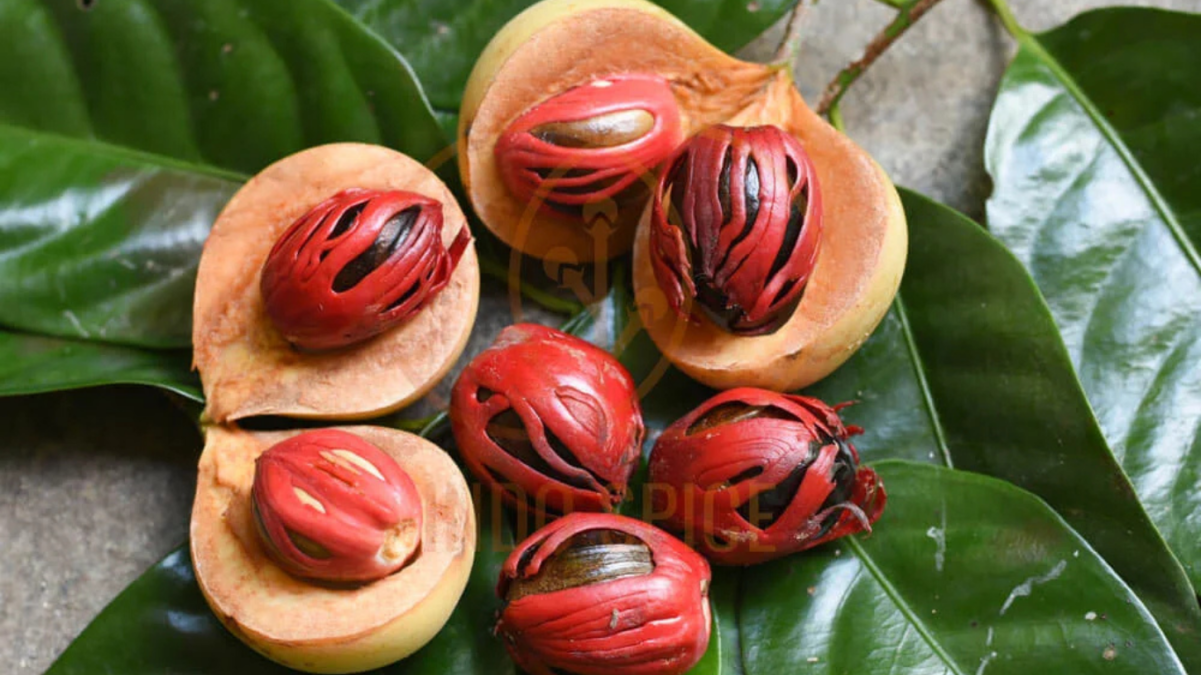
Mace comes from the nutmeg tree, Myristica fragrans, an evergreen native to the Banda Islands in the Maluku archipelago of Indonesia, historically known as the Spice Islands. The tree produces a fruit that resembles a small peach or apricot. When ripe, the fruit splits open to reveal a hard seed – nutmeg – wrapped in a bright red, lacy covering called an aril. That aril is mace.
After harvest, the aril is carefully removed by hand, flattened and dried for ten to fourteen days. During drying it changes from vivid crimson to a pale yellow, orange or tan. The resulting whole pieces are known as blades of mace. These can be used whole or ground into a fine powder. Because each fruit yields only a thin layer of aril, mace is produced in smaller quantities than nutmeg and has traditionally commanded a higher price.
The nutmeg tree thrives in tropical climates with rich volcanic soil and consistent rainfall. Today it is cultivated not only in Indonesia but also in Grenada, Sri Lanka, India, Vietnam and parts of the Caribbean and South America. Grenada, in particular, has made nutmeg and mace part of its national identity; the spice even appears on the country’s flag.
Historical Journey and Rise in Global Cuisine
Mace entered written records relatively late compared with some other spices. Early references appear in Byzantine medical texts of the sixth century, describing a red bark known as macis. Arab traders later carried it westward, protecting their monopoly with stories that kept the true source secret for centuries. By the Middle Ages, mace and nutmeg had become prized in European kitchens and apothecaries. Spices of this rarity signalled wealth; a single pound could cost as much as several fat oxen.
The European quest for direct access to the Spice Islands drove exploration and conflict. Portuguese sailors reached the Moluccas in the early sixteenth century, breaking the Arab hold on the trade. The Dutch East India Company later seized control, establishing a brutal monopoly over the Banda Islands. Wars, forced labour and the deliberate destruction of trees outside Dutch control marked this period. Only in the nineteenth century, when French and British planters successfully transplanted the trees to other tropical regions, did the monopoly finally collapse.
Despite its turbulent history, mace found a firm place in culinary traditions. It became a key ingredient in medieval European sauces, meat dishes and preserved foods. In Indian cuisine it forms part of garam masala and appears in biryanis and rich curries. Middle Eastern cooks use it in stews and pastries, while French chefs have long favoured it in custards, crème brûlée and light sauces where nutmeg might prove too forceful.
Challenges and Turning Points
The very scarcity that made mace valuable also created difficulties. Because the aril is thin and fragile, harvesting and drying require care. Improper drying can lead to mould or loss of aroma. In the colonial era, control of production meant violence and exploitation; the Banda Islands suffered population decline and environmental damage under Dutch rule.
Even after the monopoly ended, producers faced new pressures. Hurricanes in the Caribbean, particularly in Grenada, have repeatedly damaged crops. Modern challenges include maintaining quality standards, avoiding contamination and competing in a global market that demands consistency. Smallholder farmers, who still grow much of the world’s supply, must balance traditional methods with the requirements of international buyers.
Yet resilience has characterised the spice’s story. The spread of cultivation beyond Indonesia ensured supply, while careful grading systems – such as Grenada’s Fancy grade – help maintain reputation. Today’s focus on sustainable and ethical sourcing offers a quieter but important turning point, linking contemporary producers with consumers who value origin and quality.
Flavour Profile and Culinary Character
Mace offers a more delicate profile than nutmeg. It carries warm, woody notes with hints of citrus, clove, pepper and a subtle floral quality. The finish is slightly bitter and aromatic rather than heavily sweet. Many describe it as lighter and brighter than nutmeg, making it especially suited to dishes where a strong nutty note would overwhelm.
Whole blades release flavour slowly and suit long-cooked dishes such as stews, soups and braises. Ground mace is convenient for baking, spice blends and finishing sauces. Because it is potent, a little goes a long way; recipes often call for only a pinch or a single blade.
It pairs naturally with cinnamon, cloves, cardamom, ginger and black pepper. In sweet applications it enhances apple pies, custards, rice puddings and fruit cakes. In savoury cooking it lifts white sauces, fish dishes, poultry, lentils and vegetable sides. British and Scandinavian cooks have long used it in sausages and pickled foods, while Caribbean and Indian kitchens rely on its warmth in meat and rice preparations.
Modern Production and Everyday Uses
Indonesia remains the leading producer of mace, followed by significant contributions from India, Sri Lanka and Grenada. The spice reaches markets as whole blades or ground powder. Europe is a major importer, with Germany and the Netherlands playing key roles in distribution and re-export. Demand comes from both home cooks and the food industry, where mace appears in processed meats, baked goods, sauces and spice mixes.
In contemporary kitchens, mace continues to find new roles. Chefs value its ability to season pale sauces without darkening them. Home cooks add it to mulled wine, chai, roasted vegetables and even coffee. Its traditional use in preserving and pickling remains relevant, and small amounts appear in some commercial spice blends and ready meals.
While research explores potential antioxidant and digestive properties linked to compounds in Myristica fragrans, culinary use remains the primary and safest application. As with most spices, moderation is key; large medicinal doses have historically been associated with unwanted effects and are not recommended.
Quick Facts
| Detail | Information |
| Botanical Name | Myristica fragrans |
| Part Used | Dried aril (seed covering) of the nutmeg fruit |
| Common Forms | Whole blades, ground powder |
| Native Region | Banda Islands, Indonesia |
| Main Producing Countries | Indonesia, India, Sri Lanka, Grenada, Vietnam |
| Flavour Profile | Warm, woody, citrusy, floral, mildly peppery |
| Primary Culinary Uses | Baking, sauces, stews, spice blends, preserving |
| Related Spice | Nutmeg (the seed of the same fruit) |
Legacy and Lasting Impact
Mace spice endures because it occupies a distinctive place in the spice spectrum. It offers the comfort of nutmeg without the same intensity, allowing cooks greater control over flavour. Its history connects remote tropical islands with European courts, colonial ambition and the everyday pleasure of a well-seasoned dish.
In professional and home kitchens alike, mace is valued for precision. A single blade can perfume a pot of soup; a light dusting can elevate a custard. Public perception has shifted from rare luxury to accessible pantry item, yet its reputation for quality and subtlety remains intact. The lesson of its journey is one of adaptation: a spice that survived monopoly, conflict and changing tastes continues to enrich global cooking.
Conclusion
From the lacy red aril of a tropical fruit to the quiet warmth in a finished dish, mace spice has travelled a long and eventful path. Its story reflects the broader history of the spice trade while remaining firmly rooted in practical cooking. Whether used in a classic British baked pudding, an Indian biryani or a modern vegetable soup, it rewards careful handling and thoughtful pairing.
Must Read: Magfusehub Com: Exploring a Growing Multi-Niche Digital Content Hub

Dave Calhoun and Gautam Adani: The Human Stories Behind Two Titans Who Faced the Storm

Who Was Nolan Pentz Martinez Father? The Quiet Man Behind a Musical Legacy

Who Is Glena Goranson? The Quiet Strength and Heartfelt Story Behind Pete Carroll’s Life


 Technology2 months ago
Zingyzon.com in USA: Your Practical Guide to Smarter Home Living
- Technology2 months ago
Exploring Glaadvoice.com: An Independent Voice in Digital Media
- Fashion2 months ago
Home Decor Ideas TheHomeTrotters: Timeless Inspiration for Creating a Home You Love
- Technology2 months ago
Yonosamachar Com: Exploring the Rise of a Digital News Platform in the Modern Information Age
- Celebrity1 month ago
Tanner Wiseman Net Worth 2026: Age, Career, Family and Biography
- Celebrity2 months ago
Nancy Guthrie Update: Suspect Search and Ongoing Investigation into the Disappearance of Savannah Guthrie’s Mother
- Celebrity2 months ago
Jesse Belle Deutschendorf: The Private Artistic Life of John Denver’s Daughter
- Fashion2 months ago
Gelato Pique: The Japanese Brand Turning Loungewear into Wearable Dessert