Fashion
Artificial Grass: Benefits, Drawbacks and the Real Cost of a Perfect Lawn

Artificial grass has transformed the way many people think about their gardens. Once associated mainly with sports grounds and tired-looking plastic lawns, modern artificial grass now appears in family gardens, balconies, roof terraces, hospitality venues and compact urban courtyards across the UK.
Its appeal is easy to understand. Artificial grass stays green throughout the year, does not need mowing and can cope with heavy use without developing muddy patches. Yet the decision to install it is not as simple as choosing between a green lawn and a brown one. Cost, drainage, heat, wildlife, maintenance and end-of-life disposal all deserve careful consideration.
For some households, synthetic turf offers a practical answer to a demanding outdoor space. For others, a natural lawn, planted border or mixed garden may provide greater long-term value. Understanding how artificial grass works — and what it cannot replace — is the best way to make an informed choice.
What Is Artificial Grass?
Artificial grass is a manufactured surface designed to resemble natural turf. It usually consists of plastic blades stitched into a backing layer, with a prepared sub-base beneath it to provide stability and drainage. The fibres are commonly made from polyethylene, polypropylene or nylon, with polyethylene often used for softer domestic products.
Unlike natural grass, artificial grass does not grow. It requires no seed, soil, sunlight or regular feeding, which is why it is often marketed as a low-maintenance alternative to a traditional lawn. However, “low maintenance” does not mean maintenance-free. Leaves, dirt, moss, pet waste and other debris still need to be removed, while the pile may require brushing to keep it upright.
The modern product also has a history beyond domestic landscaping. Synthetic turf became widely known in the 1960s, particularly after its high-profile use at the Houston Astrodome in 1966. That connection helped establish artificial turf as a sports surface before the product gradually entered residential gardens.
Today, domestic artificial grass is available in different pile heights, colours, densities and textures. Shorter pile products can suit balconies and small courtyards, while longer, softer varieties are often chosen for family gardens. The right option depends on how the area will be used rather than simply how realistic the sample looks in a showroom.
Why Artificial Grass Remains Popular
The strongest argument for artificial grass is convenience. A natural lawn may need mowing during the growing season, reseeding after wear, feeding, edging and occasional watering. Synthetic turf removes most of those routine tasks, making it attractive to people with limited time, mobility difficulties or small gardens that are difficult to maintain.
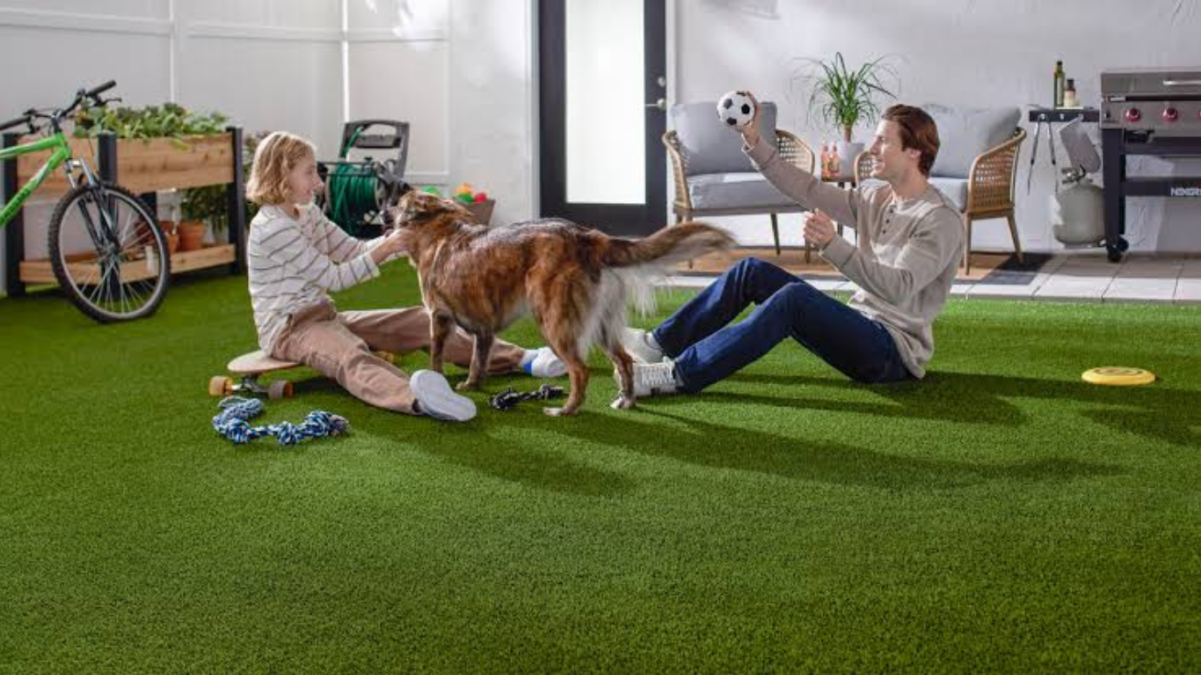
Artificial grass also creates a consistent appearance. It does not become yellow during dry spells or turn muddy after repeated footfall, provided it has been installed correctly. Families with young children may value a surface that is less likely to develop bare patches, while dog owners often choose it to reduce mud being carried into the house.
There can be practical benefits after wet weather, too. A properly prepared installation allows water to pass through the surface rather than leaving puddles across a compacted lawn. That performance depends heavily on the sub-base and drainage design, however. Poor installation can result in standing water, unpleasant smells or a surface that shifts under pressure.
Artificial grass can also make use of awkward spaces. Narrow side gardens, roof terraces and shaded courtyards may be difficult places to establish healthy natural turf. Synthetic grass can provide a neat, visually continuous surface where growing conditions are poor.

The Cost of Artificial Grass
Artificial grass usually involves a higher initial outlay than sowing seed or laying basic natural turf. The final price depends on the size of the area, the product selected, ground preparation, removal of existing material, edging, drainage and labour.
The visible grass is only one part of the project. Installers may need to excavate the existing ground, add a compacted aggregate base, apply a finer bedding layer and fit a weed membrane before laying and joining the turf. Gardens with poor access, slopes or drainage problems can require additional work.
This means that a low purchase price does not necessarily represent good value. A cheaper product may look less natural, flatten more quickly or prove harder to repair. Conversely, a higher-quality surface may be more comfortable and durable but still carry the environmental and replacement concerns associated with plastic.
Homeowners should request a written quotation that explains preparation, waste removal, edging, drainage, guarantees and future repair arrangements. It is also sensible to ask how offcuts and the old lawn will be disposed of. The apparent simplicity of artificial grass can conceal a substantial construction project beneath the surface.
Maintenance and Everyday Use
Artificial grass still needs regular attention, although the routine is generally lighter than caring for living turf.
Leaves and twigs should be swept or removed before they decompose into the pile. The surface may need occasional brushing, particularly in heavily used areas where the fibres begin to lie flat. Pet owners should remove solid waste promptly and rinse areas where urine has collected. A suitable cleaning solution may help with odours, but harsh chemicals can damage the fibres or backing.
Furniture, paddling pools and play equipment can leave temporary impressions. Moving them periodically allows the pile to recover and reduces wear in one place. Cigarettes, barbecues and other hot objects should never be placed on the surface, as melted fibres are difficult to restore.
Artificial grass can also become hot in direct sunlight. This matters especially in enclosed gardens, balconies and play areas. Shade, careful positioning and occasional cooling with water may make the surface more comfortable, although watering it does not turn synthetic turf into a natural cooling system.
The surface is not immune to weeds, either. Seeds can settle in the edges or in accumulated debris. Good installation and regular cleaning reduce the problem, but they do not guarantee a completely weed-free garden.
Artificial Grass and the Environment
Environmental questions are central to the debate. Artificial grass can reduce household mowing, fertiliser and irrigation, but those benefits should not be confused with a universally positive environmental impact. Synthetic turf is made from plastic, requires energy and materials to manufacture, and eventually needs replacing.
The most obvious loss is biological. A natural lawn, particularly one managed with longer areas or mixed planting, can support insects, soil organisms and other small forms of life. The Royal Horticultural Society recommends providing a range of habitats and plants, allowing some plants to set seed and limiting unnecessary plastic use when creating wildlife-friendly gardens.
The RHS has also identified artificial lawns among features that can harm efforts to promote garden biodiversity. Its advice notes that long grass is associated with greater abundance and variety of butterflies, highlighting what may be lost when every part of a garden is replaced with a uniform synthetic surface.
Plastic pollution is another concern. Research and environmental organisations have raised questions about the release of microplastics through ultraviolet exposure, weather, foot traffic and mechanical wear. A recent Royal Society of Chemistry review described microplastic emissions from artificial turf systems as an area receiving increasing scientific attention.Artificial Grass: Benefits, Costs and Drawbacks
End-of-life disposal is also important. Artificial grass cannot simply be treated like green garden waste. Some local recycling facilities accept it, while others may direct it towards general waste or specialist disposal. Recycle Devon, for example, advises that artificial grass can be taken to a local Household Waste Recycling Centre, but arrangements vary by area.
Planning, Drainage and Installation
Before installing artificial grass, homeowners should consider what happens to rainwater. A surface may appear permeable because water passes through the blades, but the layers beneath can still restrict drainage if they are poorly designed or compacted.
Government guidance on garden surfacing emphasises the importance of permeable materials and directing rainwater towards a permeable area, border or suitable drainage solution. Its planning guidance is particularly relevant to front gardens and hard surfaces, where runoff can contribute to flooding and pollution.
Planning rules differ across the UK and may depend on the location, type of property and character of the area. Listed buildings, conservation areas, flats and homes subject to local restrictions may require additional checks. Edinburgh guidance, for example, states that artificial grass and its substructure can constitute development and may require permission in conservation areas or the grounds of listed buildings.
A reputable installer should assess the existing ground before offering a price. Warning signs include vague guarantees, no explanation of the sub-base, pressure to cover the entire garden and claims that artificial grass is completely maintenance-free or environmentally neutral.
Good design can also reduce the downsides. Instead of covering every available metre, homeowners can combine a smaller synthetic play area with planting beds, trees, permeable paths and a wildlife-friendly corner. This approach preserves some living habitat while retaining the practical advantages of a durable surface.
Artificial Grass: Quick Facts
| Detail | Information |
| Product type | Synthetic lawn or turf surface |
| Common materials | Polyethylene, polypropylene and nylon |
| Main uses | Domestic gardens, balconies, play areas and sports facilities |
| Main advantage | Year-round appearance with less routine upkeep than natural turf |
| Key maintenance | Sweeping, brushing, rinsing and prompt removal of waste |
| Main drawbacks | Upfront cost, heat, limited biodiversity and plastic disposal |
| Drainage requirement | A correctly prepared, suitable sub-base and drainage design |
| Typical lifespan | Varies according to quality, installation, weather and use |
| Recycling | Availability depends on local facilities and product composition |
| Planning considerations | Rules vary by location, property and garden setting |
Is Artificial Grass Right for Your Garden?
Artificial grass may suit a household that needs a hard-wearing, tidy surface and accepts the long-term responsibilities of owning a plastic product. It can be particularly useful where constant foot traffic makes natural turf difficult to maintain, or where muddy conditions create a practical problem.
It may be less suitable for anyone who values wildlife, natural soil, seasonal change or the sensory qualities of a living lawn. The smell of freshly cut grass, the presence of clover and daisies, and the ability of a lawn to support insects are not features that synthetic turf can reproduce.
A natural lawn is not automatically perfect. It may require water, mowing, feeding and repair, and poorly managed turf can offer limited wildlife value. A mixed approach is often more sustainable and attractive: retain living grass where it thrives, reduce the size of the lawn where necessary, and use paving, planting or artificial grass only where there is a clear practical reason.
The most important question is not whether artificial grass is good or bad in every situation. It is whether the product genuinely solves a specific problem better than the available alternatives.
Legacy and Lasting Impact
Artificial grass has changed outdoor design by making a lawn-like appearance possible in places where natural turf struggles. Its development from a specialist sports surface into a mainstream household product reflects a wider desire for convenience, predictable appearance and gardens that can withstand demanding use.
Its lasting impact, however, is likely to be judged as much by responsible use as by visual appeal. Better drainage, clearer product information, improved recycling and designs that protect biodiversity could all shape the next stage of the industry.
For homeowners, the lesson is straightforward: a green surface is not necessarily a living landscape. The best garden decisions balance appearance with function, cost, maintenance and the wider needs of the environment.
Conclusion
Artificial grass can be a practical, attractive solution when used thoughtfully, particularly in busy or difficult spaces. It reduces mowing and can offer a clean, consistent surface throughout the year, but it also brings installation costs, heat, maintenance duties, biodiversity concerns and a difficult end-of-life question.